Emma's educational round-up
A weekly/fortnightly insight into developments within the realm of education.
My recommendations
News
The National Conversation
The National Conversation is a UK-wide listening initiative, inviting people right across the country to share what they value about community life and the kind of communities they want to build together.
Individuals 16 years and over are asked to complete a survey, the responses of which will be utilised by The Independent Commission on Community and Cohesion to come up with ideas to facilitate people in the UK to ‘live well together’.
Between 18th and 24th June 2026, various activities will be on offer to enable those under 16 to express their views too.
It is anticipated that the results will be published in late 2026.
https://www.thenationalconversation.org.uk/
Class League, Triptico (perfectly timed to coincide with the World Cup 2026)
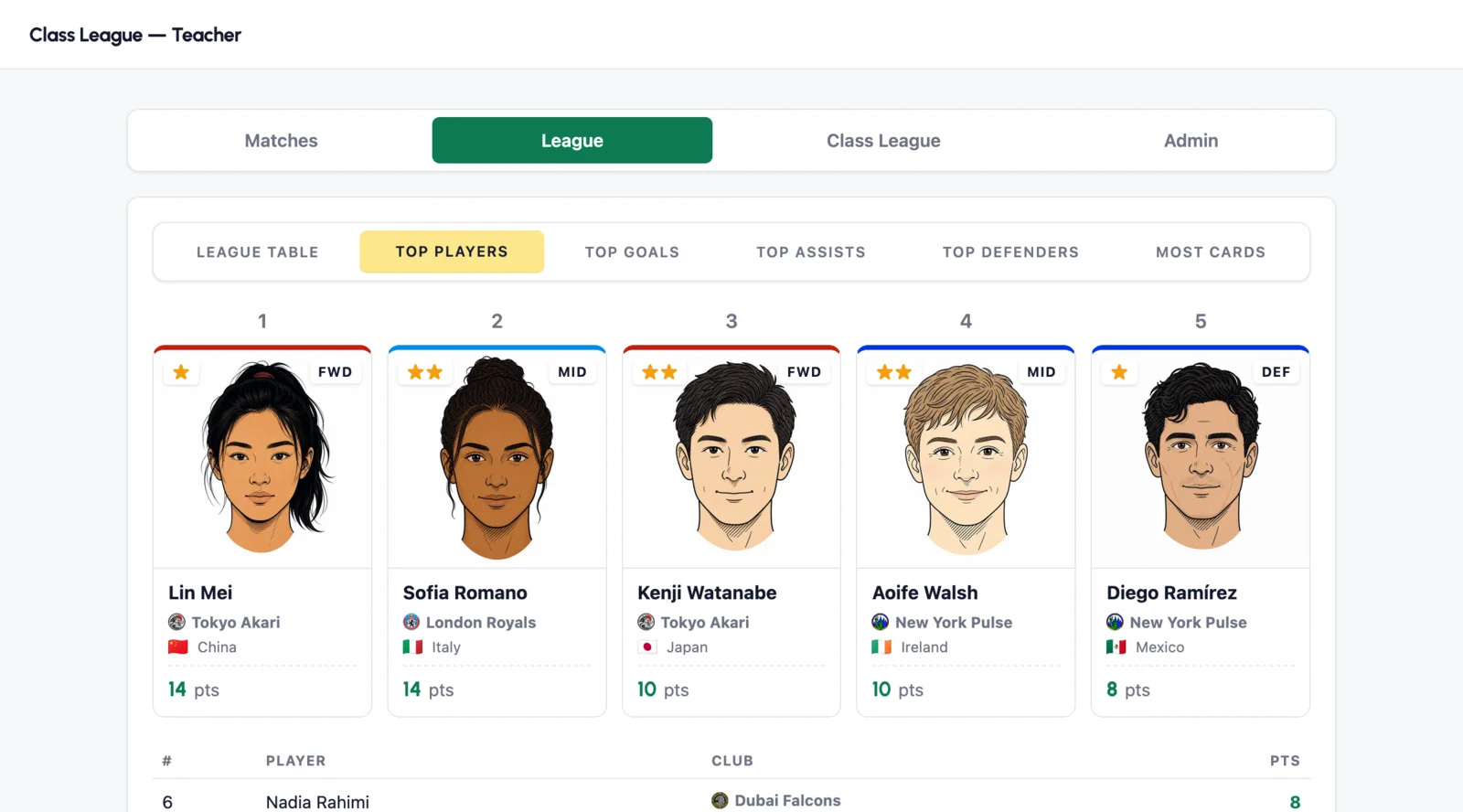
Class League is a new classroom idea from David Riley, the creator of Triptico.
It is based on something David used with his own classes as a teacher: a fantasy football-style league where students manage teams, matchdays are simulated and classroom effort helps decide the league.
Teachers can award points for effort, progress, homework, participation or anything else they want to encourage. Match results and classroom points both shape the league, giving students a fun reason to stay involved across the season.
Students do not need accounts, passwords or email addresses.
David is currently looking for teachers who would like to try the demo and help shape the pilot version. If you are keen to be involved, then contact David: david@tripticoplus.com
Website
The Empathy Day Festival runs from 4th to 11th June 2026.
Jump into someone else’s story with a FREE week-long festival of fun and inspiring activities, which build real-life empathy through stories.
Resource
One to use with GCSE and A level students …
This was flagged up by Iain Palôt, What a fantastic resource, with some brilliant examples of GIS, different ways of displaying data and aerial photographs included too.
This spatial compendium contains an in-depth analysis of Athens’ unique DNA. It compares its urban structure with other global cities and provides new insights into its metropolitan and local spatial, social, economic and environmental attributes.
Book
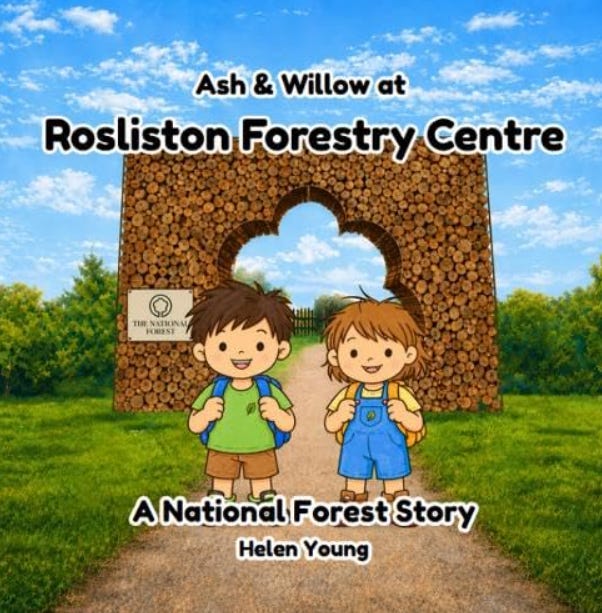
Helen Young has just published her first picture book (Ash and Willow at Rosliston Forestry Centre). The book is part of a series aimed at primary-aged children and based on visitor locations in the National Forest. Each book tells the story of how two children (Ash and Willow) interact with the specific features of the landscape at each place. Helen has also created resources to feature alongside them, which are being given away FREE to schools located within the National Forest.
https://www.amazon.co.uk/Ash-Willow-Rosliston-Forestry-Centre/dp/106769160X
If you are a National Forest attraction and would like your own Ash and Willow story, then do get in touch with Helen: hyoung00@gmail.com
Podcast
Just over 20 minutes in length and great for anyone focusing on climate change, changing places, natural hazards and glaciation with Key Stage 4 and Key Stage 5 students …
The Inquiry: Are the Himalayan glaciers at a tipping point?
The Himalayan glaciers are melting more rapidly as global temperatures rise, raising concerns about the future of ecosystems and communities across the Himalayan mountain range. Glaciers store more than two thirds of the world’s freshwater and help regulate global temperatures by reflecting the sun’s rays.
Across South Asia, melting ice is contributing to the formation of unstable glacial lakes and increasing the risks of floods, droughts and avalanches. The Himalayas are a vital source of water for millions of people, supporting agriculture, energy production and livelihoods from tourism.
Experts warn that continued glacier loss could have significant consequences for people living in the region and the mountainous ecosystem, but what can be done to respond to these changes?
https://www.bbc.co.uk/sounds/play/w3ct98pn
TV programme/movie clip
BBC Weather Live
I came across this the other day; a fascinating way to explore differences in weather encountered in one day in various places throughout the UK. Develop locational knowledge by identifying each place on a map and then discuss which factors might account for the differences in weather experienced by individuals in those towns/cities. The background music is quite soothing too!
https://www.bbc.co.uk/iplayer/episode/l0058c8g/bbc-weather-live
App/tool/game
How will populations across the world change in the 21st century?
Explore for yourself with a new interactive tool from those at Our World in Data (https://ourworldindata.org/population-simulation-tool).
How many people will live in your country in 2100? Demographers publish projections using assumptions about key demographic changes, most notably fertility rates, life expectancy, and migration rates. But no one knows for sure how many children people will have decades from now, or how migration will shift. So it’s worth asking what the population would look like if things turn out differently from what the UN or other demographers assume.
Daniel Bachler and Sophia Mersmann have built a population simulation tool that lets you do just that — for every country in the world. Pick a country, adjust the assumptions, and see how the projections change, for both total population and age structure. For instance, what would happen if fertility rates recovered to replacement level, or migration was cut in half?
Hannah Ritchie uses the tool to focus on South Korea, whose population is projected to more than halve by 2100, from 52 million today to just 22 million. What would it take to stop the decline? And how likely are these different scenarios?
‘Geography in the news’
Interesting given the recent mini heatwave and many new records set towards the end of May; the first hot and sunny bank holiday for a long time!
UK ‘built for climate that no longer exists’ and needs urgent changes to survive global heating, report warns
The Royal Geographical Society (RGS-IBG) has added new resources to its ‘Geography in the news’ section; I was especially drawn towards the article about ‘AI data centres in the UK’, ideal for use with secondary-aged students.
https://www.rgs.org/schools/resources-for-schools/ai-data-centres-uk
CPD
Primary
The Geographical Association (GA) Early Years Primary Phase Committee (EYPPC) has another GeogLive! event taking place from 5.00 pm to 6.00 pm on Wednesday 10th June 2026. There will be input from a range of primary educators, each sharing opportunities and ideas for teaching about trade at Key Stage 2. What's the knowledge that learners need to understand local, national and global trade and its significance in their lives? Do we, and how might we, consider the people in these trades with distant places? This session will also include some school-based case studies and recommend some brilliant resources.
Book your place here: https://www.ticketsource.com/eyppc/t-gljyjaq
Secondary
Southwest Geography Conference 2026
Aimed at those in the south west of England in particular …
Simon Ross recently sent me an e-mail confirming numbers to date; they look very healthy and I am not at all surprised given the outlined programme that both he and John Davidson have coordinated, plus the fact that it is FREE to attend. Hope to see you there!
Competitions/challenges
Primary and secondary
Geographical Association (GA) Model-making competition 2026
Each year, the Geographical Association (GA) runs a competition aimed at Key Stage 2 and Key Stage 3 pupils, encouraging them to exploit their creativity and geographical knowledge with a spot of model-making. 2026’s theme is ‘fragile environments’.
Youngsters are asked to design and make a 3-D model to showcase a fragile environment and explain why it is vulnerable, using reused or waste cardboard as the main material and supplemented with additional recycled materials from home or school. Examples could be located close to where they live or further afield, e.g. small pond; hedgerow; small woodland; sand dune; heathland; mountain environment; mangroves.
Leadership for Change 2026 - The future of friendship: human connection in a digital age
The World Health Organisation has declared loneliness as a global public health concern. In a digital age, it appears that we are more connected than ever. Yet, how do we build deeper, more authentic bonds and relationships?
The Economist Educational Foundation’s five-lesson curriculum and competition extends beyond basic debates about screen time and AI and gives students the opportunity to address the root causes of the global loneliness crisis. 10- to 16-year-olds will become empowered thought-leaders, who are challenged to develop and present original strategies that build genuine community cohesion. To bridge the gap between classroom ideas and global influence, the most impactful idea will be published in The Economist. This is a unique opportunity to showcase a youth-led solution to a worldwide audience.
The Prize launches on 15th September 2026.
Sign up to the dedicated Leadership for Change Prize newsletter to keep up-to-date: https://forms.monday.com/forms/50076a004e798f563d0505c2906dbc6b?r=use1. Expect tips on teaching the lessons, preparing your students to enter the competition, exclusive expert and judge announcements, early access to the curriculum, etc.
There are also informational webinars about the Prize for teachers on Wednesday, 24th June 2026. Register to attend at 10 am BST/9 am UTC or 4 pm BST/3 pm UTC.
If you have any questions, get in touch with Isabelle Parkin: isabelleparkin@economist.com
https://talk.economistfoundation.org/prizes/leadership-prize-2026/
Opportunities for pupils
Secondary
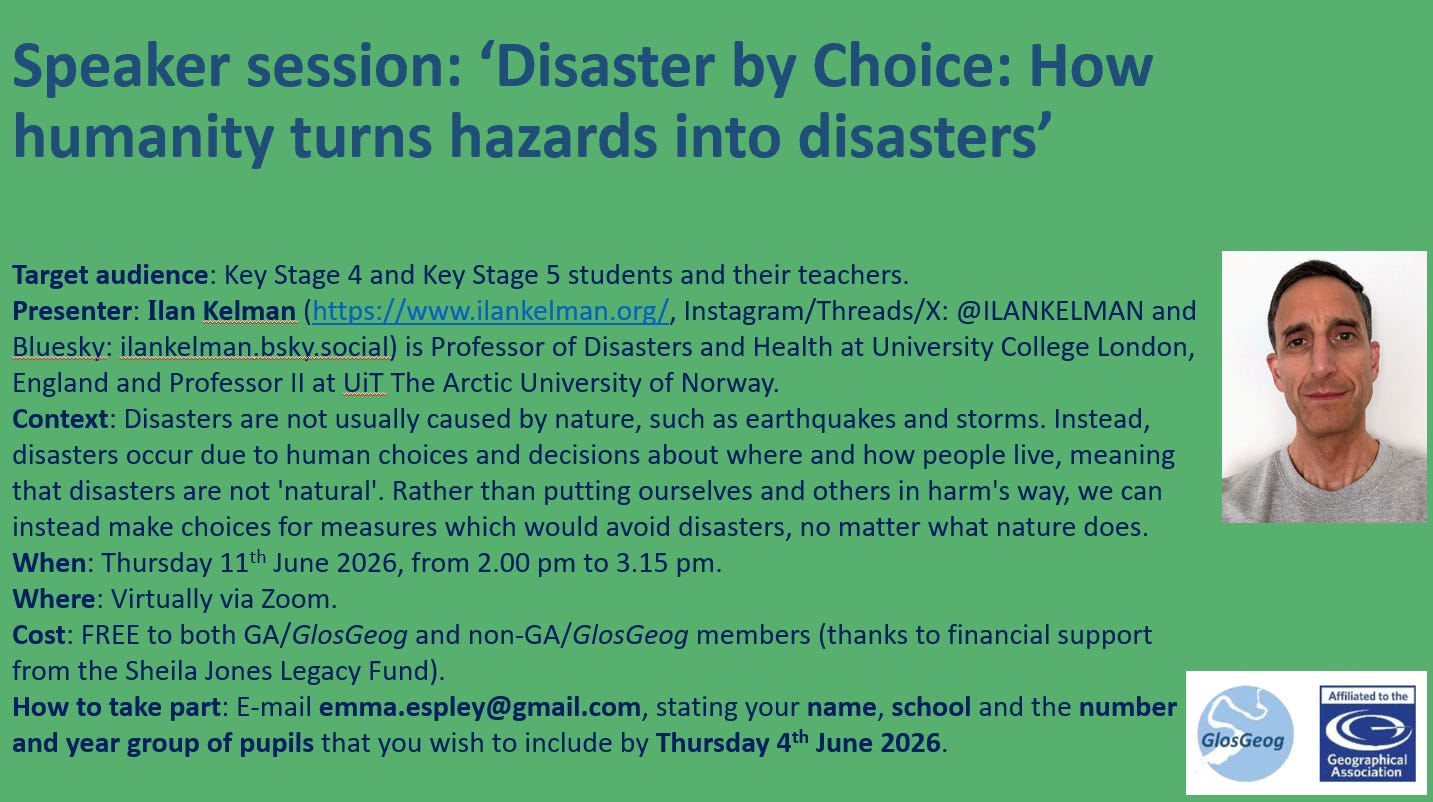
If you attended the Geographical Association (GA) Annual Conference and Exhibition in mid-April in Sheffield and heard Ilan Kelman speak, then you know that Key Stage 4 and Key Stage 5 students and their teachers are in for a treat here … don’t miss it! More than 35 schools have already signed up; only room for a couple more.
Hope the above provides some inspiration and saves you time. Do let me know if you make use of any of the recommendations or have others that I have missed; I do love to hear about, and see evidence of, pupils in action both in and beyond the classroom.
Emma Espley